Summary The court observed that judicial integrity extends beyond the absence of proven corruption and requires judges to maintain an impeccable character
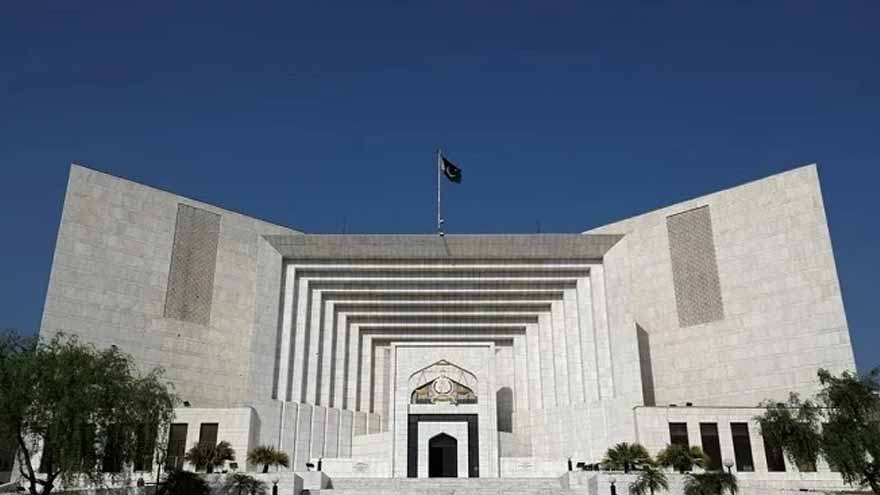
ISLAMABAD (Dunya News) - The Supreme Court has ruled that judges whose reputation and credibility are seriously compromised should be dismissed from service rather than granted compulsory retirement, stressing that public trust is the cornerstone of the judiciary.
In a detailed judgment authored by Justice Shahid Waheed, a three-member bench comprising Justice Naeem Akhtar Afghan and Justice Muhammad Shafi Siddiqui upheld the dismissal of former Additional District and Sessions Judge Afzal Zahid.
The court observed that judicial integrity extends beyond the absence of proven corruption and requires judges to maintain an impeccable character, exemplary conduct and an untarnished public reputation.
“A judge’s integrity cannot be divided; it is either complete or non-existent,” the judgment stated, adding that judges must remain above suspicion to preserve confidence in the justice system.
The bench noted that the judiciary derives its authority not from force but from public trust and moral credibility. It warned that retaining judges whose reputation has been damaged undermines judicial ethics and weakens confidence in the courts.
The court further held that granting compulsory retirement and related benefits to judges with questionable integrity could create the perception that accountability within the judiciary is negotiable.
Referring extensively to Islamic teachings, the judgment described the office of a judge as a sacred trust that requires justice, honesty and accountability. It cited Quranic verses, Hadith and opinions of prominent Islamic jurists emphasising the need for judges to possess both integrity and public confidence.
The case stemmed from multiple complaints against former judge Afzal Zahid, who served in Mailsi, Punjab. Although a departmental inquiry did not conclusively prove corruption allegations, supervisory reports found his reputation and integrity to be compromised.
The competent authority subsequently dismissed him from service. However, the Service Tribunal later converted the dismissal into compulsory retirement.
The Lahore High Court challenged that decision, while the former judge sought reinstatement and removal of adverse remarks against him.
The Supreme Court ultimately ruled in favour of dismissal, observing that the judiciary requires not only actual integrity but also the perception of integrity in the eyes of the public.